

The Hidden Cost of Bad Reporting
Most teams think reporting is a reflection of reality. In practice, it’s often a reconstruction of it, pieced together from multiple systems, manual inputs, and best guesses. And when that reconstruction is even slightly off, the consequences rarely show up right away.
A missed detail doesn’t feel like a crisis in the moment. It’s just one small inconsistency, one overlooked update, one number that hasn’t been refreshed yet. But in environments where deals are complex and timelines are tight, those small inconsistencies have a way of compounding.
Over time, they turn into delays, rework, stress, and in some cases, significant financial exposure.
This is the hidden cost of bad reporting, not a single failure, but a system that quietly introduces risk into everything around it.
Where the Cost Actually Shows Up
The challenge with bad reporting is that it rarely fails in obvious ways. It doesn’t break like a system outage or a missed deadline. Instead, it creates subtle friction across the entire operation, which is why most teams accept it as “just part of the process.”
But if you look closely, the cost is everywhere.
Small Details, Large Consequences
One of the most dangerous effects is how small details can escalate into major financial consequences: a missing condition, an outdated contract value, or a version that hasn’t been updated can seem insignificant in isolation. However, across dozens of active deals, those gaps create blind spots, and blind spots in high-value transactions are where real problems begin.
In new home sales, this can be as simple as a missing disclosure that isn’t caught until months later, when the deal is closing and everything is under pressure. At that point, it’s no longer a small oversight. It becomes a problem that’s expensive, time-sensitive, and difficult to unwind.
This is how large losses often originate, not from a single catastrophic mistake, but from a series of minor ones that go unnoticed until it’s too late.
This is how large losses often originate, not from a single catastrophic mistake, but from a series of minor ones that go unnoticed until it’s too late.
The ‘Operational Tax’ No One Accounts For
There’s also the time component, which is easier to dismiss but just as costly.
Teams spend a surprising amount of time chasing information, validating whether reports are accurate, and rebuilding the same data before every internal or external update.
None of this work moves deals forward. It’s purely administrative overhead, an operational tax that compounds quietly as deal volume increases.
The Stress Beneath the Surface
Over time, this starts to affect how people feel about their work. There’s a persistent, low-level uncertainty that sits behind everything, a sense that something might be missing, even if nothing obvious is wrong.
Coordinators double-check their work, sales leaders hesitate before relying on numbers, and teams begin building habits around verification instead of trust.
It’s not always visible from the outside, but internally, it creates a level of stress that becomes normalized and, eventually, leads to burnout.
The Illusion of Control
Perhaps the most concerning impact is the way bad reporting creates a false sense of control. On the surface, everything appears organized. Reports are being shared, spreadsheets are updated, and summaries are circulated regularly.
But underneath, the data is fragmented, delayed, or incomplete. By the time an issue becomes visible, whether it’s a missing document, a compliance gap, or a deal at risk, it has often progressed further than anyone realized.
So where does this actually come from?
From Static Data to Live Visibility
When reporting is tied directly to the system where work actually happens, the concept of “pulling a report” starts to disappear. Data doesn’t need to be assembled, it already exists.
From Chasing Information to Shared Clarity
Since the data is live, there’s no delay between what’s happening and what’s visible. Teams aren’t rebuilding reports or second-guessing whether something is up to date. They’re simply accessing the current state of their deals, knowing that it reflects reality.
Everyone, from coordinators to sales leaders to executives, is looking at the same information, updated in real time.
- There’s no version control issue
- No lag between updates
- No uncertainty about whether something has changed
The conversation shifts from “Is this accurate?” to “What do we do next?”
That shared visibility also eliminates one of the most common sources of friction, which is conflicting information. The constant back-and-forth, asking for the latest version, confirming whether something has been updated, searching through emails or folders… all that noise disappears. Not because the work has been reduced, but because the system itself is structured in a way that makes information immediately accessible.
When Reporting Actually Reflects Reality
If your reporting is not updated in real time, then its no longer a reflection of what’s happening and becomes a lagging indicator. It tells you what was true at some point in the past, based on the information that was available when the report was created. That might be acceptable for historical analysis. It breaks down quickly when you’re managing live deals.
A developer might look at a report showing eight active deals and make decisions based on that number, not realizing that two of those deals fell through the day before. The data looks accurate, but it no longer reflects reality, and that gap is where uninformed decisions get made.
When reporting actually reflects reality, the benefits are both operational and psychological.
From an operational standpoint, decisions happen faster because the data is trusted. Errors are identified earlier, when they’re still easy to fix. Risk is reduced, not through additional oversight, but through better visibility.
Just as importantly, the experience of the work changes. The underlying stress that comes from uncertainty begins to fade. Teams no longer feel like they’re constantly checking and re-checking their work. Instead, they can rely on the system to surface what matters.
That shift, from managing information to trusting it, is where the real value lies.
Rethinking What Reporting Should Be
When reporting is built on a single, unified system, the entire dynamic changes. Instead of pulling information from multiple sources, the data lives in one place, where it’s updated as work happens. Reporting is no longer a separate task, it becomes a natural byproduct of the system itself.
Reporting is no longer a separate task, it becomes a natural byproduct of how your business operates.
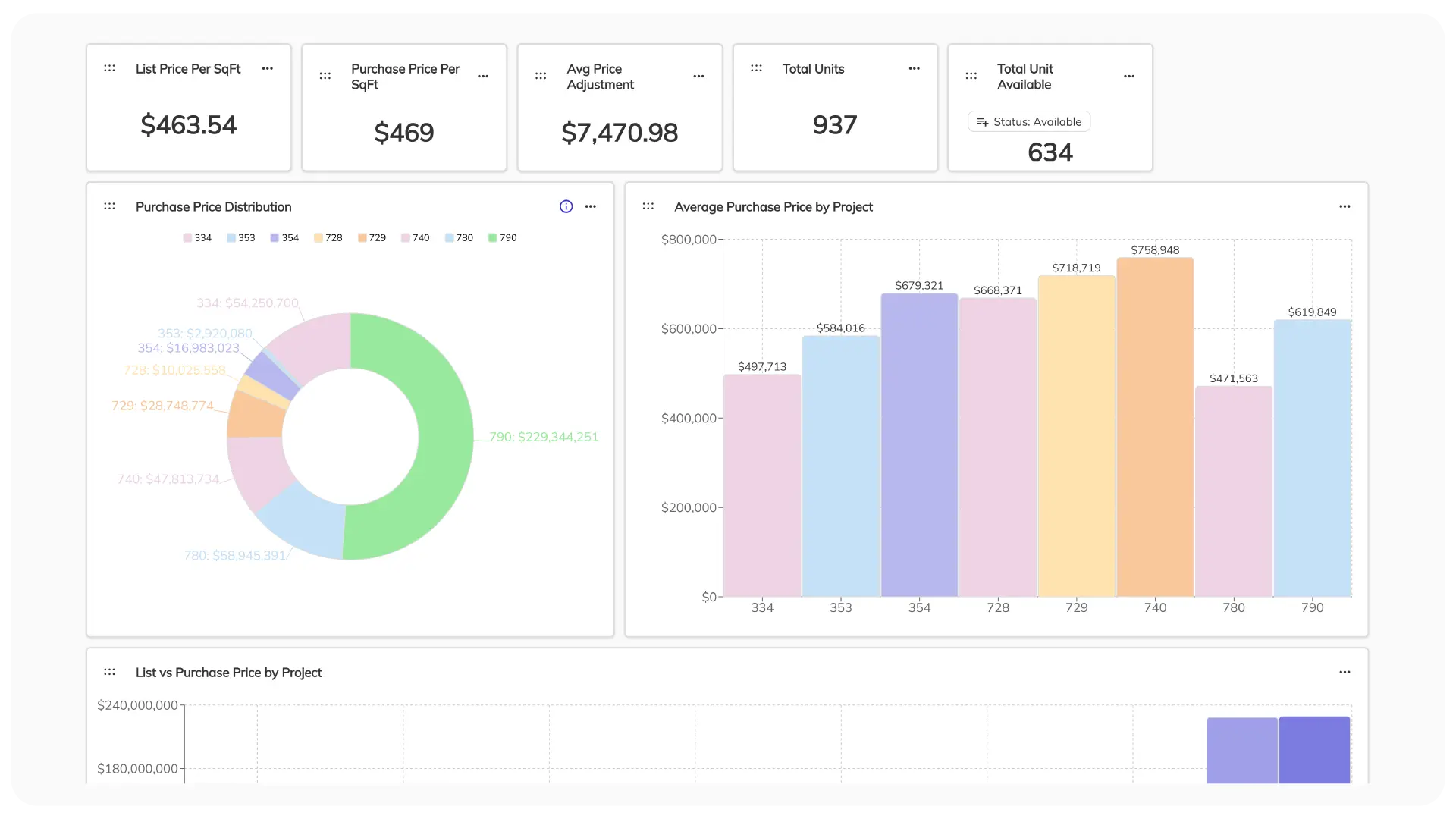
With Pluto, reporting stops being something your team has to build, it becomes something your system produces automatically.
Because everything lives in one place: every deal, every update, every document, the data is updated as work happens. There’s no need to pull from multiple systems, no need to reconcile spreadsheets, and no need to question whether what you’re seeing is current.
Reporting is no longer a separate task. It’s a natural byproduct of how your business operates.
That shift changes more than just efficiency. It changes how decisions are made.
Bad reporting isn’t just an inconvenience, it’s a structural issue that affects everything downstream: time, accuracy, visibility, and ultimately, financial outcomes. And what makes it dangerous is that the cost is rarely obvious. It’s distributed across teams, buried in day-to-day workflows, and easy to accept because it feels familiar.
Pluto removes that fragmentation entirely.
Instead of relying on disconnected tools and manual processes, your team operates from a single, unified system where everyone sees the same information, in real time. There’s no version control issue, no lag between updates, and no need to “trust” that the data is accurate, because it reflects reality as it exists.
In environments where small details can have large consequences, that distinction matters.